


Filter by:
-
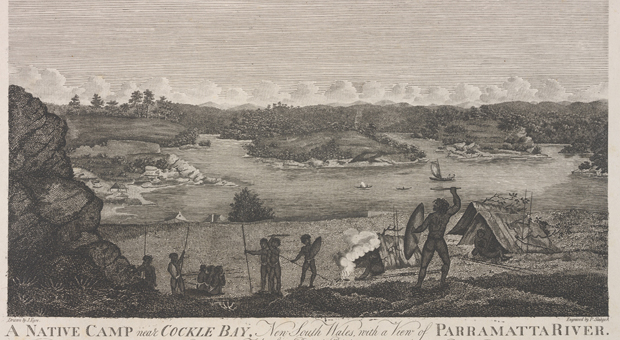
Tinker’s Well
Author: Paul Irish and Tamika Goward All people depend on fresh water to live, and so it is usually the case that reliable sources of water known to Aboriginal people…
-
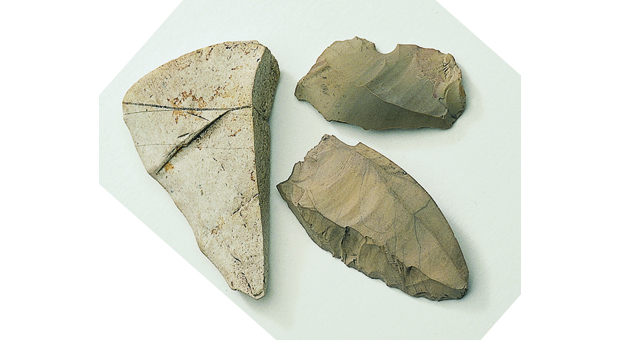
Moores Wharf Midden
Author: Paul Irish and Tamika Goward In the late 1970s, the NSW Maritime Services Board began to redevelop the Moores Wharf area at Millers Point on the end of the…
-

Moore Park Engraving
Author: Paul Irish and Tamika Goward On a slab of sandstone just outside Centennial Park there were once some Aboriginal engravings. Rock engravings were produced when Aboriginal people carved them…
-

Yurong Cave and Yurong Midden
Author: Paul Irish and Tamika Goward Yurong Point is known today as the site of Mrs Macquarie’s Chair, a seat carved from stone in the 1810s so Governor Lachlan Macquarie’s…
-

William Street
Author: Paul Irish and Tamika Goward In 1925, a stone axe was found more than five metres below the surface during construction work at the corner of William and Riley…
-

St Mary’s Cathedral Hatchet
Author: Paul Irish and Tamika Goward An Aboriginal stone axe head, also called a ‘ground-edge hatchet’, was found in a road cutting behind St Mary’s Cathedral in 1876. The hatchet…
-

The KENS Site
Author: Paul Irish and Tamika Goward In 2003, archaeologists discovered a large Aboriginal campsite in the western part of central Sydney. It was named the KENS Site after the surrounding…
-

Junction Lane Campsite
Author: Paul Irish and Tamika Goward In 1997, an Aboriginal campsite was discovered at Junction Lane in Woolloomooloo during archaeological excavations ahead of the construction of the Eastern Distributor motorway.…
-

Conservatorium of Music
Author: Paul Irish and Tamika Goward In 1998, some Aboriginal stone artefacts were found during archaeological excavations ahead of the redevelopment of the Sydney Conservatorium of Music on Macquarie Street.…
-

Wynyard Walk campsite
Author: Paul Irish and Tamika Goward During archaeological excavations associated with the construction of the Wynyard Walk pedestrian link in mid-2014, a small Aboriginal campsite was located. The campsite consisted…
-

Darling Walk Midden
Author: Paul Irish and Tamika Goward In 2009 archaeologists found an Aboriginal campsite, or ‘midden’, on the eastern side of Cockle Bay (Darling Harbour) in an area known as the…
-

YININMADYEMI Thou didst let fall
This major artwork in Hyde Park South honours Aboriginal and Torres Strait Islander men and women who served in our nation’s military and their families. Sydney-based artist Tony Albert created the work, inspired by the story of his…
-

Government Boatsheds
The government’s Marine Board boatsheds were on the eastern side of Circular Quay at Bennelong Point, just to the south of Fort Macquarie and the Sydney Rowing Club boatsheds. Around 18…
-

Foundation for Aboriginal Affairs
The Foundation for Aboriginal Affairs was established in December 1964 to provide assistance to Aboriginal people living in Sydney. Although it was originally intended as a non-political and non-religious organisation,…
-

Our Lady of Mount Carmel Primary School
A number of private and public schools in Sydney’s inner-city suburbs have provided primary education for Aboriginal people. Our Lady of Mount Carmel Primary School at Waterloo, originally known as…
-

Darlington Public School
A number of private and public schools in Sydney’s inner-city suburbs have provided primary education for Aboriginal people. Darlington Public School was established in 1878, moving to new premises on…
-

Cleveland Street High School
A number of private and public schools in Sydney’s inner-city suburbs have provided primary education for Aboriginal people. Cleveland Street High School has educated generations of Redfern and Waterloo children…
-
Alexandria Park High School
A number of private and public schools in Sydney’s inner-city suburbs have provided primary education for Aboriginal people. In 1982, Cleveland Street and Waterloo High Schools were merged to become…
-

Waterloo Town Hall & Library
Waterloo Town Hall was converted to a library in the early 1970s. The Koori Collection is a dedicated Aboriginal history collection held at the library which was officially launched in…
-

Federal Match Factory
Sydney has long been a magnet for Aboriginal and Torres Strait Islander people seeking work opportunities, shelter and connections with community and family. Many worked in private industry in Sydney’s…
-

Australian Glass Manufacturers
Sydney has long been a magnet for Aboriginal and Torres Strait Islander people seeking work opportunities, shelter and connections with community and family. Many worked in private industry in Sydney’s…
-

Francis Chocolates
Sydney has long been a magnet for Aboriginal and Torres Strait Islander people seeking work opportunities, shelter and connections with community and family. Many worked in private industry in Sydney’s…
-

Eveleigh Railway Yards
Eveleigh Railway Yards was Sydney’s largest employer from the time it opened in 1886. It was also one of the biggest employers of Aboriginal people living in Sydney. Many Aboriginal…
-
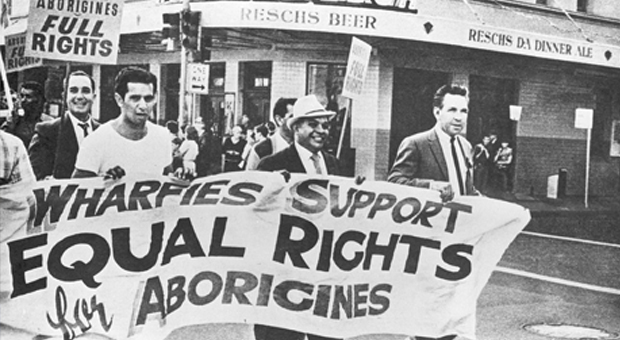
Trades Hall
When Aboriginal people began to organise politically, there were often sympathetic non-Aboriginal people to help in the struggle, some of them unionists. From the 1950s, unions and Aboriginal organisations worked…
-

Redfern Town Hall
Town Halls throughout Sydney’s inner suburbs provided large civic spaces that Aboriginal organisations used to gather and socialise for leisure activities and political meetings. Aboriginal activist William Ferguson was a…