



Filter by:
-

Ricketty Dick
Author: Laila Ellmoos Ricketty Dick (c1795-1863) was an Aboriginal man who lived in Sydney in the early to mid-19th century. He was also known as Warrah Warrah or William (Bill)…
-

Pemulwuy
Pemulwuy was a courageous resistance fighter who led a guerrilla war against the British settlement at Sydney Cove from 1788 through to 1802. Because of his resistance to the invaders,…
-

Cora Gooseberry
Cora Gooseberry was wife to King Bungaree and was an identity in Sydney for 20 years after his death. Her Aboriginal name was recorded as ‘Carra or Kaaroo’. She was known…
-

Bennelong
Bennelong (who also went by the names Wolarwaree, Ogultroyee and Vogeltroya) was from the Wangal people and is regarded as one of the most significant and notable Aboriginal people in…
-

Bungaree
Known for being able to straddle both black and white societies, Bungaree was from the Garigal clan at Broken Bay and moved to the Sydney area. He was a diplomat, mediating between…
-

Colebee
Colebee (also known as Coleby) was a warrior of the Gadigal clan at Port Jackson when the British First Fleet arrived in 1788. The customs and lifestyle of the local Aboriginal…
-

Arabanoo
Arabanoo (c1760-89) was the first of Governor Arthur Phillip’s protégés. Phillip’s plan was to learn the language and customs of the local people. He believed that if some of them…
-

Western science and Aboriginal people
Author: Steven Ross Imperialism has devastating effects on Indigenous peoples the world over, and science is often used to ‘prove’ western superiority over so-called ‘primitive’ Aboriginal groups. This justified the…
-

First Contact
Author: Anita Heiss In 1770 Captain James Cook met few Aboriginal people on the Eastern Australian shoreline. Because they did not grow crops and because he assumed there were no…
-
Dawes Point / Tar-Ra
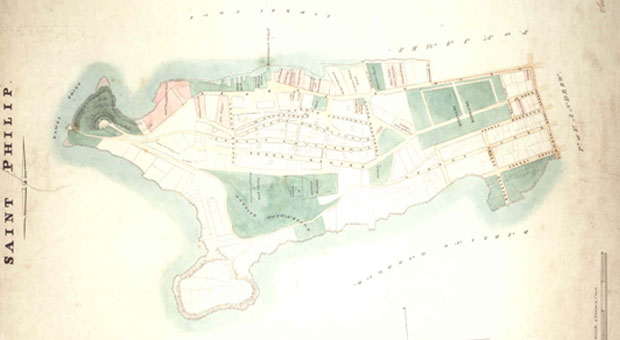
Author: Paul Irish and Tamika Goward The Aboriginal name for the peninsula on the western side of Sydney Cove is Tar-Ra. It is also known as Dawes Point because it…
-

Sydney Cove / Warrane
The Aboriginal name for Sydney Cove as recorded in a number of First Fleet journals, maps and vocabularies, was Warrane, also spelt as War-ran, Warrang and Wee-rong. This place is…
-
The Domain and Royal Botanic Gardens
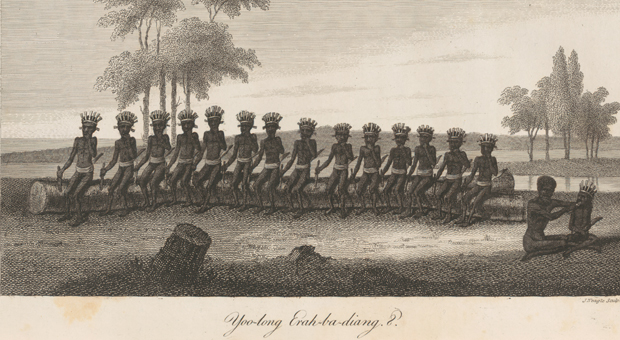
Author: Paul Irish The Governor’s Domain has been a public space since the earliest days of the Sydney colony, and continued to be used for many years by Aboriginal people.…
-
The site of First Government House
Author: Paul Irish and Tamika Goward Sydney’s first Government House overlooking Sydney Cove was built for Governor Arthur Phillip in 1789. The building and its grounds were an important place…
-

Hyde Park South
Until the mid-1820s, Aboriginal people travelled from all over Sydney, and as far away as the Hunter and the Illawarra, to gather at a ceremonial contest ground to the south…
-

Australian Museum
The Australian Museum is Australia’s oldest natural history museum. It was established in 1827 when the British Colonial Office authorised a museum in NSW for the collection of ‘rare and…
-

Prince Alfred Park (Cleveland Paddocks)
Prince Alfred Park, earlier known as Cleveland Paddocks, was an Aboriginal camp site until the mid-19th century. Sydney’s Aboriginal people lived here, west of the city centre, until the coming…
-

Lake Northam
Blackwattle Creek was once a tidal watercourse that extended from its marshy headwaters at Glebe towards the suburbs of Redfern and Waterloo to the south. Lake Northam within Victoria Park…
-

Bennelong Point / Dubbagullee
Bennelong Point / Dubbagullee, the peninsula on the eastern side of Sydney Cove, was the site of a brick hut built for Bennelong by Governor Arthur Phillip in 1790. Within…
-

Lilyvale Campsite
Author: Paul Irish and Tamika Goward The Rocks area is mainly known as a place of early European history, but it was also used by Aboriginal people for many years…
-

Sheas Creek (Alexandra Canal) Alexandria
Author: Paul Irish and Tamika Goward At Beaconsfield in the 1890s, workers on the Alexandra Canal began cutting through the sediments of Shea’s Creek and made some remarkable discoveries. The…
-

Tank Stream Sydney
Author: Paul Irish and Tamika Goward Central Sydney is built in the Tank Stream valley. The Tank Stream now runs underneath the city, but its fresh water was one of…